United States / Australia / Europe
Somali
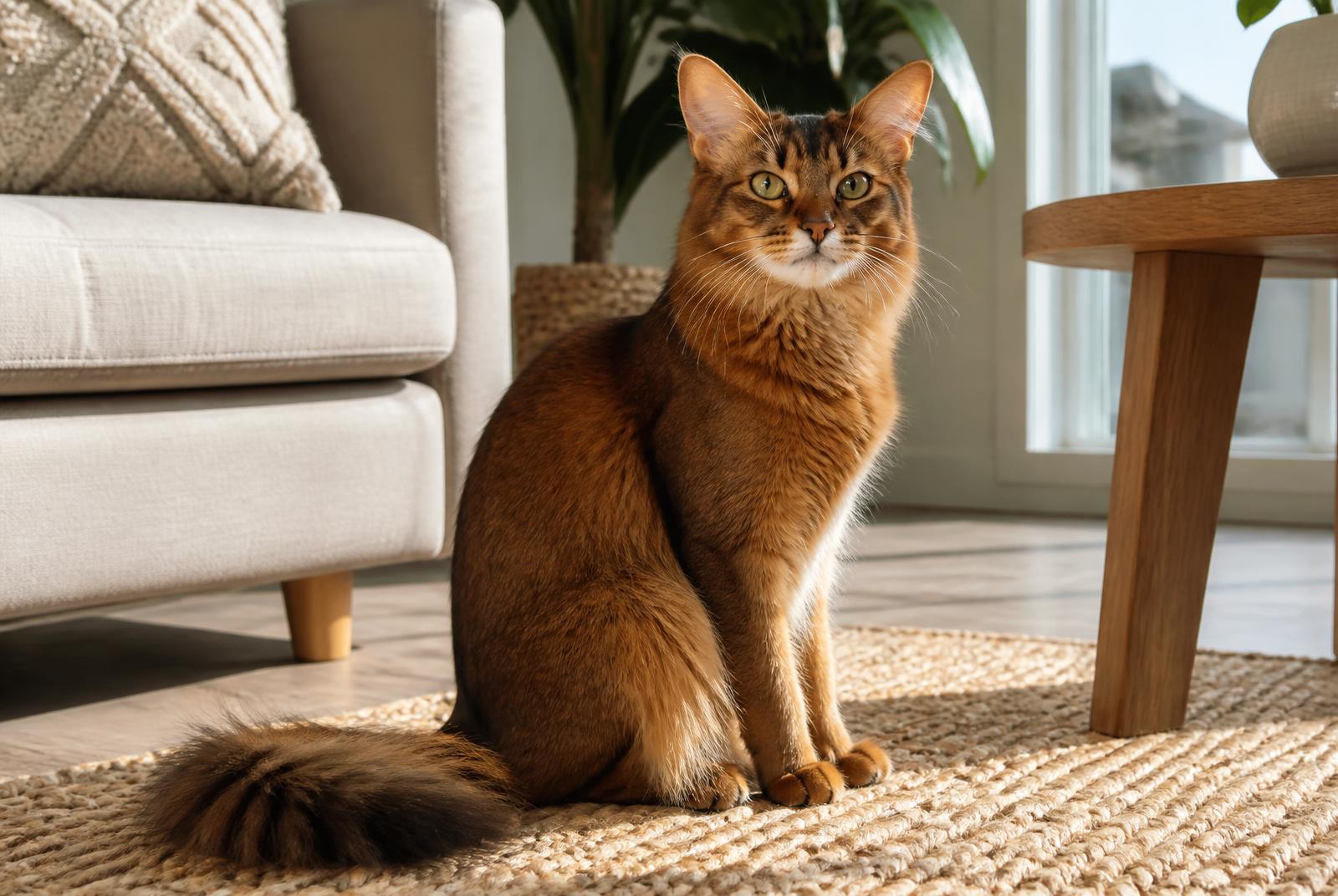
A longhaired Abyssinian with a fox-like ruff, endless curiosity and a need for active play and company.
ReMews. veterinary review board
The longhaired Abyssinian explorer
The short version
- Semi-long ticked coat with a full ruff and bottle-brush tail
- Extremely active, curious and playful into adulthood
- Needs twice-weekly combing, daily during sheds
- Thrives with company and vertical space
- Screen for PK deficiency and HCM
- Weight
- 3–5.5 kg
- Lifespan
- 12–16 yrs
- Coat
- Semi-long
- Size
- Medium
- Grown male
- 4–5.5 kg
- Grown female
- 3–4.5 kg
- Years to full size
- about 1.5
- One-off setup
- €950–1700
Get one if…
- Active households that want a playful, curious cat
- People with vertical space and puzzle toys
- Homes where someone is around most of the day
Think again if…
- Sedentary owners or very quiet homes
- People away all day with no companion cat
- Anyone who wants a calm lap cat
Trait profile
Somalis are longhaired Abyssinians: bright, busy and athletic. They need active play, vertical space and regular combing.
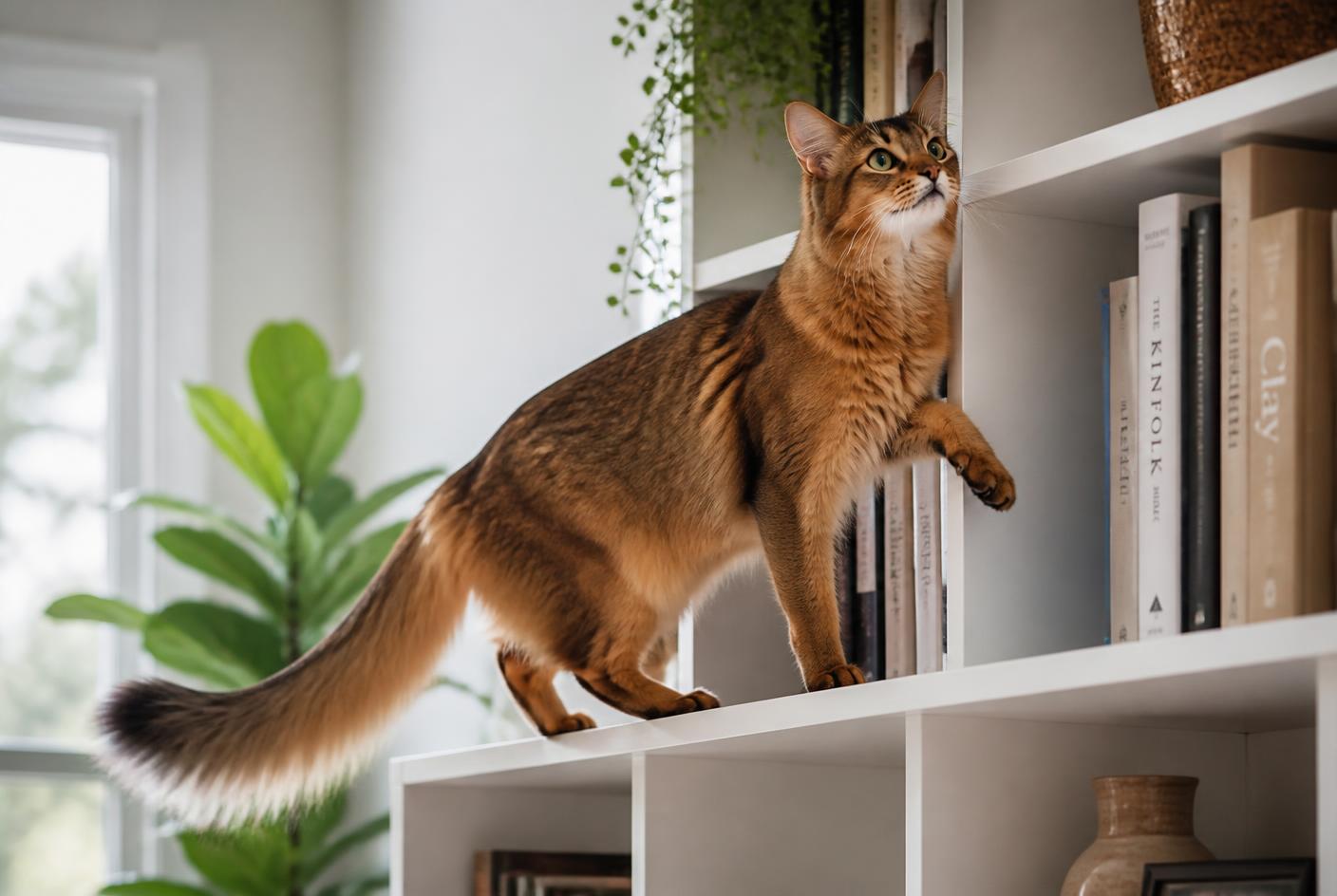
Space & setup. Vertical territory is essential. Somalis need tall trees, shelves and safe high routes. Floor space matters less than climbing options.
Allergies. No cat is hypoallergenic. The semi-long coat will shed and spread allergen. Spend time with adults before committing.
The review
Somalis share the Abyssinian's ticked coat and busy mind, but wear it in a semi-long, fox-like coat with a full ruff and bottle-brush tail. They are curious, athletic and into everything.
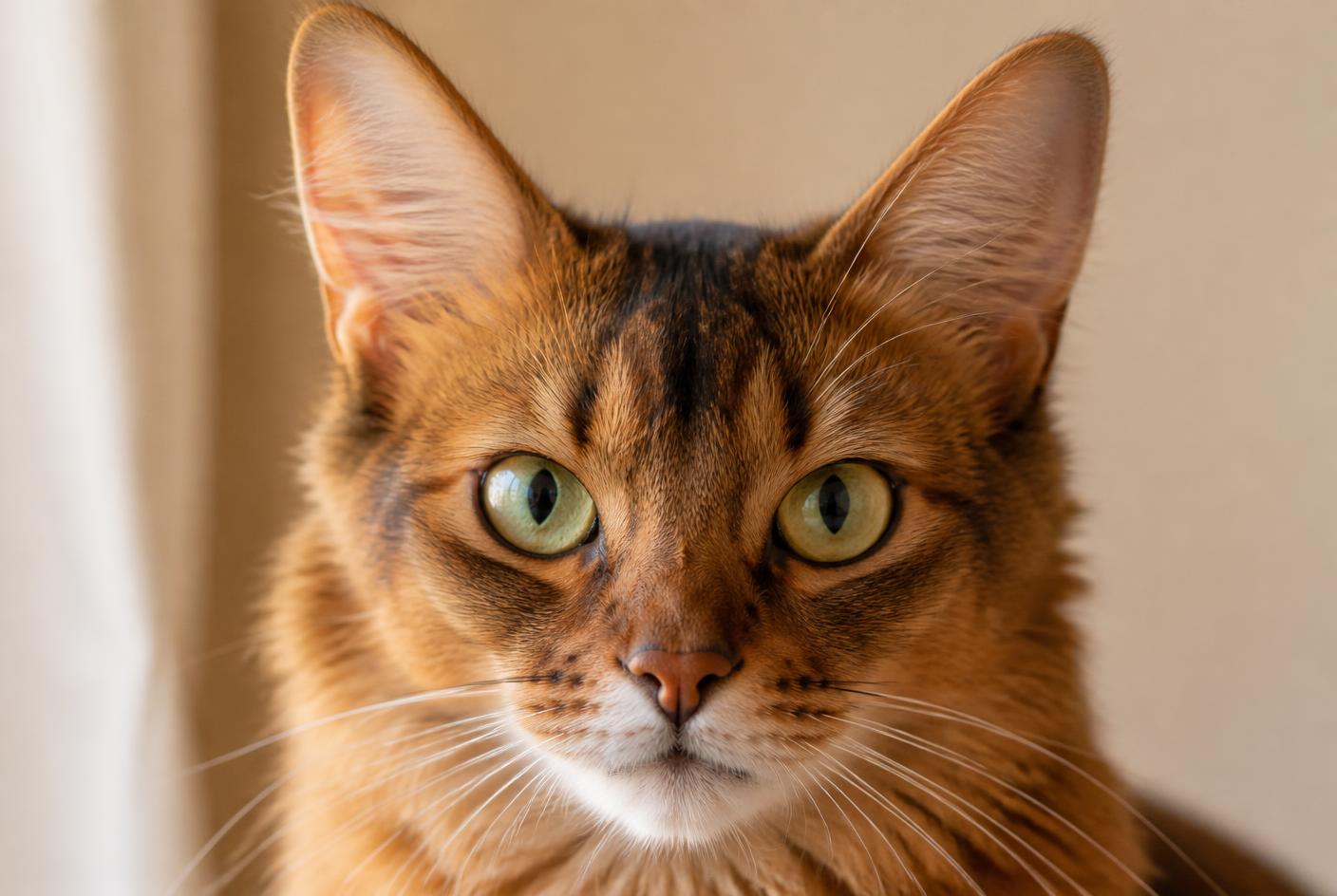
If the Abyssinian is a sports car, the Somali is the same car with a longer coat and a more dramatic tail. Everything that defines the Abyssinian is present: the ticked coat, the large ears, the inquisitive expression and the inability to leave an object alone. The difference is the coat, semi-long, soft and carrying a full ruff and breeches that give the cat a wild, fox-like outline.
The breed was essentially an Abyssinian with a longhair gene, first recognised in the mid-twentieth century. Males usually finish between 4.0 and 5.5 kg, females between 3.0 and 4.5 kg. They are medium-sized but feel light and springy because of their long legs and lean build.
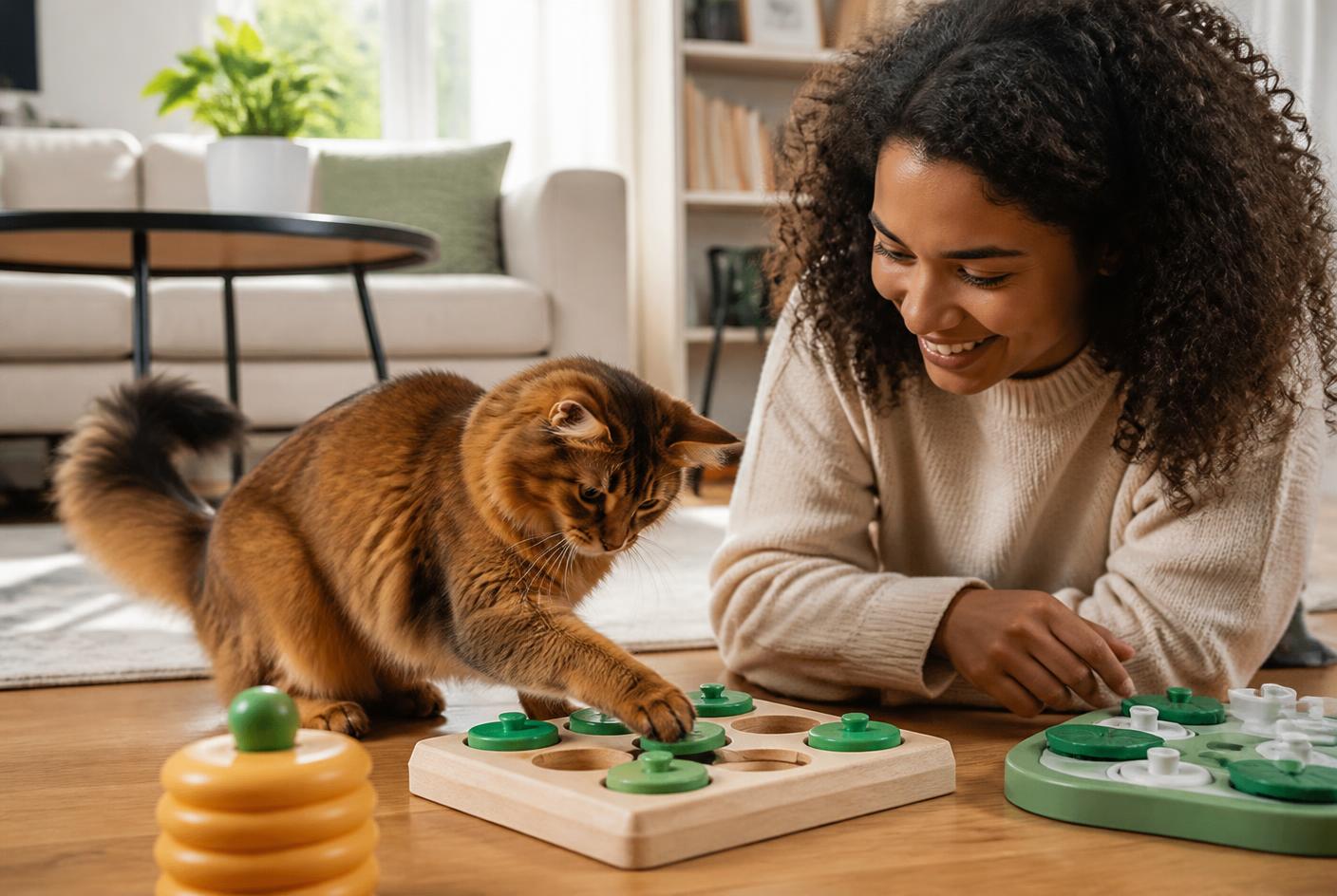
Energy is the headline trait. Somalis are not content to watch the world; they want to rearrange it. They open cupboards, investigate sinks, bat small objects under furniture and then demand help retrieving them. They stay playful well into adulthood and need two active play sessions a day plus puzzle feeders, climbing trees and safe high routes.
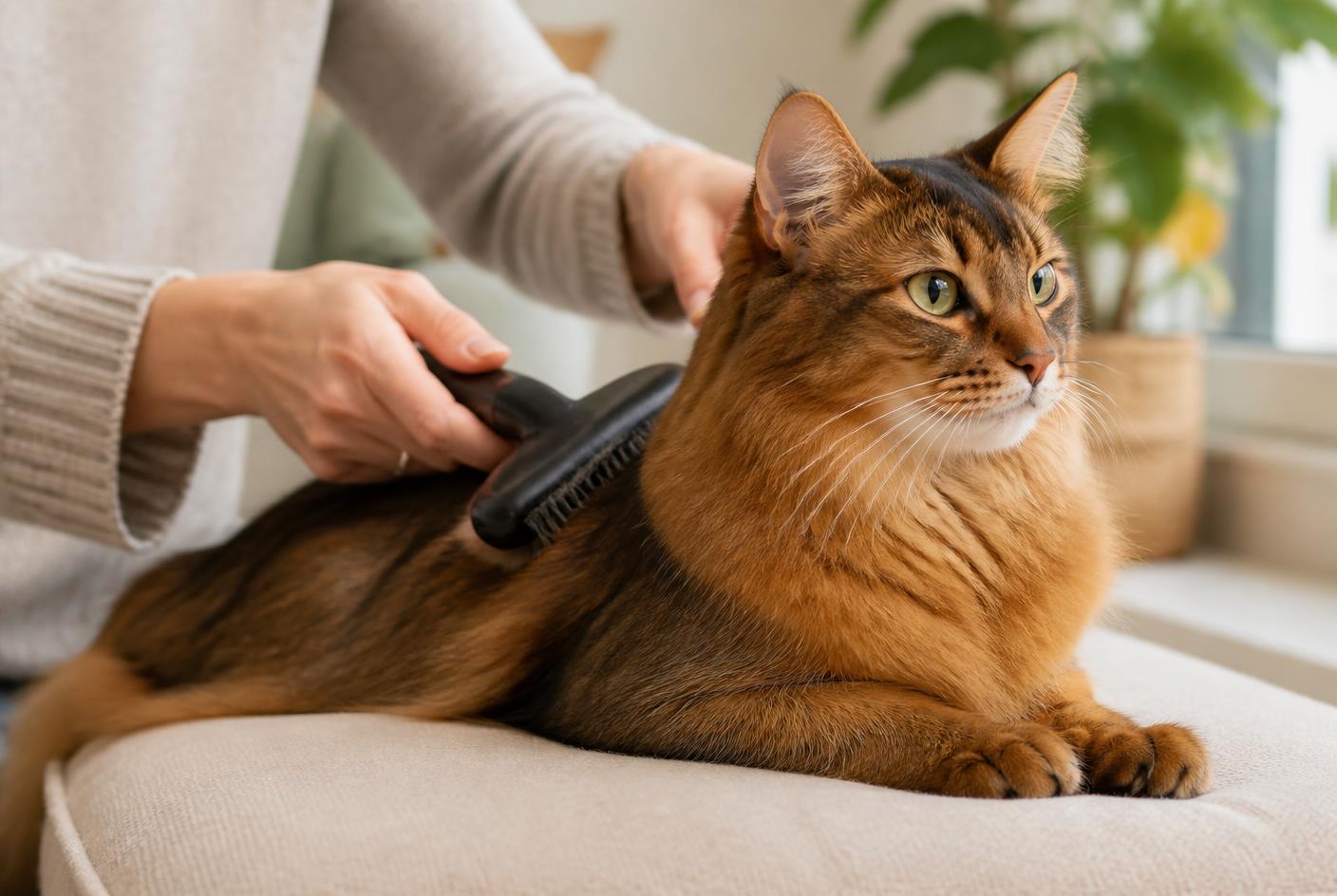
The coat needs more attention than an Abyssinian's. Twice-weekly combing prevents mats behind the ears and under the armpits. During the spring and autumn sheds, daily combing keeps the loose hair under control and reduces hairballs. The good news is that most Somalis enjoy grooming if introduced early.
Socially, they are people-oriented but not always lap cats. They prefer to be near you, supervising, and they thrive in households where someone is around for much of the day. A single Somali left alone for long hours is a recipe for boredom and destructive behaviour. Two Somalis together can keep each other entertained.
Health concerns include an inherited form of pyruvate kinase deficiency that can cause anaemia, a risk shared with Abyssinians, plus the usual HCM screening for any pedigree line. Dental disease and patellar luxation are also worth watching.
The right home is active, enriched and patient. They suit families who enjoy a cat with a sense of humour and do not mind a little chaos.
A beautiful, busy cat for people who want a companion that is always plotting the next adventure. Not for the sedentary household.
Grooming, realistically
- 1Comb twice a week with a fine comb
- 2Concentrate on the ruff, armpits and britches
- 3Daily combing during heavy sheds
- 4Introduce nail trimming and tooth brushing as a kitten
What you actually need
- Fine-tooth metal comb
- Soft slicker brush
- Nail clippers
- Enzymatic toothpaste and finger brush
Kitten to adult
| Age | Male | Female | What is happening |
|---|---|---|---|
| 3 months | |||
| 6 months | |||
| 9 months | |||
| 12 months | |||
| Full size |
Ranges are typical, not targets. Judge condition by ribs and waist, and check with the ideal weight checker.
What to ask a breeder
- Have the parents been tested for PK deficiency?
- Have breeding cats been screened for HCM?
- How are kittens raised around people, other cats and toys?
- At what age do kittens leave the breeder?
Health watch-list
What to ask a breeder about, and what to watch for over a lifetime. This is orientation, not veterinary advice, anything you notice belongs in front of a vet.
Pyruvate kinase deficiency
NotableAn inherited enzyme deficiency causing anaemia, shared with Abyssinians. A genetic test exists and responsible breeders use it.
Hypertrophic cardiomyopathy
NotableHCM can occur in the breed. Echocardiogram screening of breeding cats is valuable.
Patellar luxation
UncommonA slipping kneecap that can cause a skipping gait. Worth asking about in the line.
Dental disease
Common with ageRoutine dental care is essential as the cat ages.
Matting and hairballs
Likely if neglectedThe semi-long coat mats behind the ears and under the legs. Without regular combing, hairballs increase.
Boredom-related behaviour
Likely if under-stimulatedA bored Somali may become destructive, noisy or withdrawn. Enrichment is not optional.
What it costs to keep one
Realistic running cost
€86 / month
About €1,032 a year, or roughly €14,448 across a 14-year life, before purchase price, neutering and one-off vet events.
Before the cat arrives. Budget roughly €950–1700 for trays, carrier, posts, bowls, bedding and grooming kit sized for this breed. Figures throughout are indicative and vary a good deal between countries.
Interactive · built for this breed
Is a Somali right for your home?
The longhaired Abyssinian: curious, energetic and into everything. Five questions on energy, grooming, climbing space and company.
Verdict
An excellent match
You want an intelligent, active cat and you have the space, grooming routine and playtime to support it.
Keep the weight honest with the ideal weight tool, or compare the alternatives in the matchmaker.
The verdict, by household
Great with children who enjoy interactive play. Small objects will be batted away, so accept a little chaos.
Fine if there is vertical space and enrichment. A bored Somali will redecorate.
Fun and affectionate, but the energy and grooming are more demanding than many first cats.
Usually good with another playful cat. Cat-friendly dogs are accepted if introduced gently.
When to call your vet
- Lethargy or pale gums suggesting anaemia
- Laboured breathing or fainting after play
- Persistent limping or skipping gait
- Sudden change in appetite or dramatic weight loss
- Mats that cause skin redness or pain
Nothing here is a diagnosis. Breathing difficulty, sudden hind-leg weakness and straining to urinate are emergencies, go the same day.
Somali vs the closest alternatives
| Breed | Weight | Energy | Grooming | € / month |
|---|---|---|---|---|
| Somali | 3–5.5 kg | 10/10 | 5/10 | €86 |
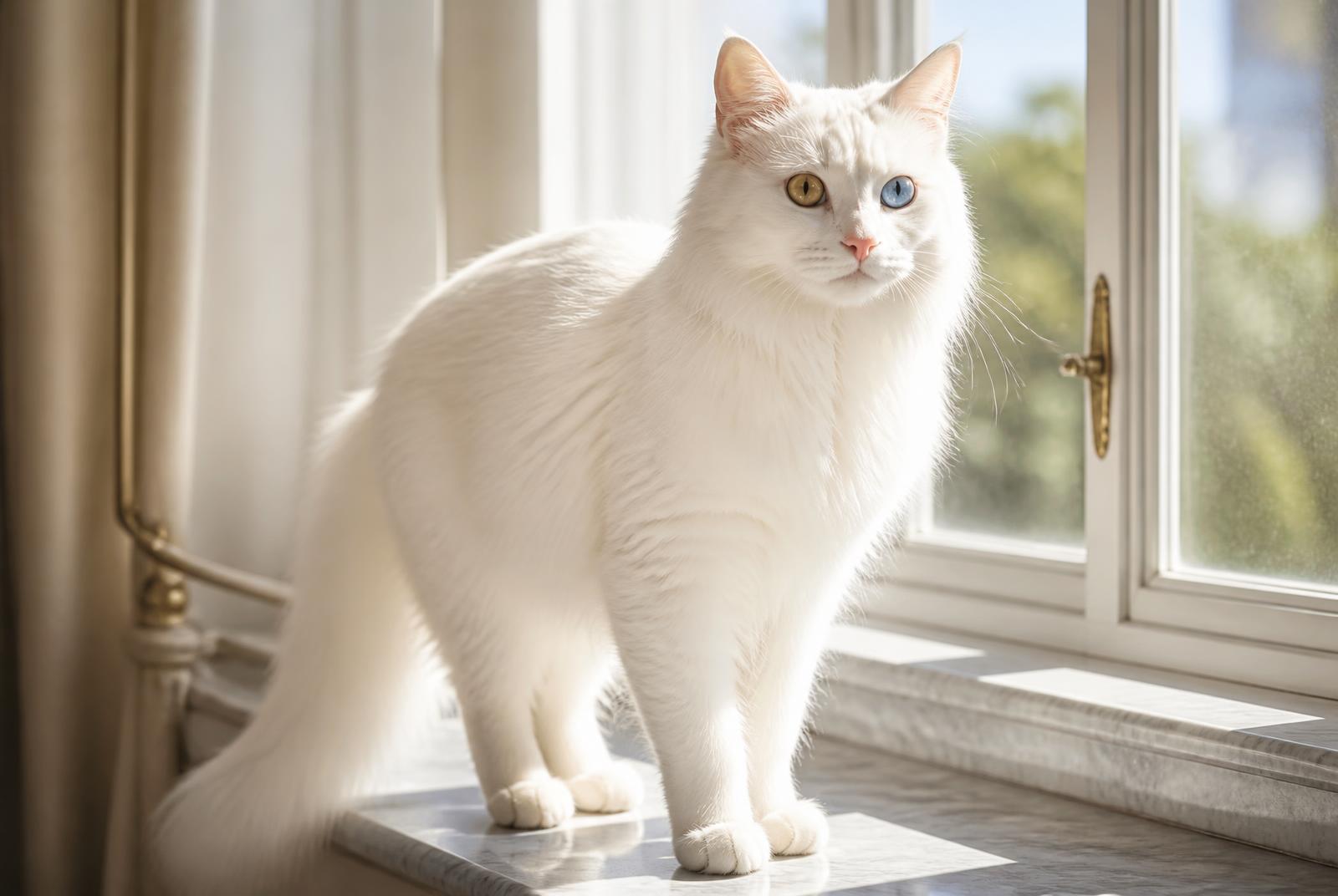
| Turkish Angora | 2.5–5 kg | 9/10 | 5/10 | €86 |
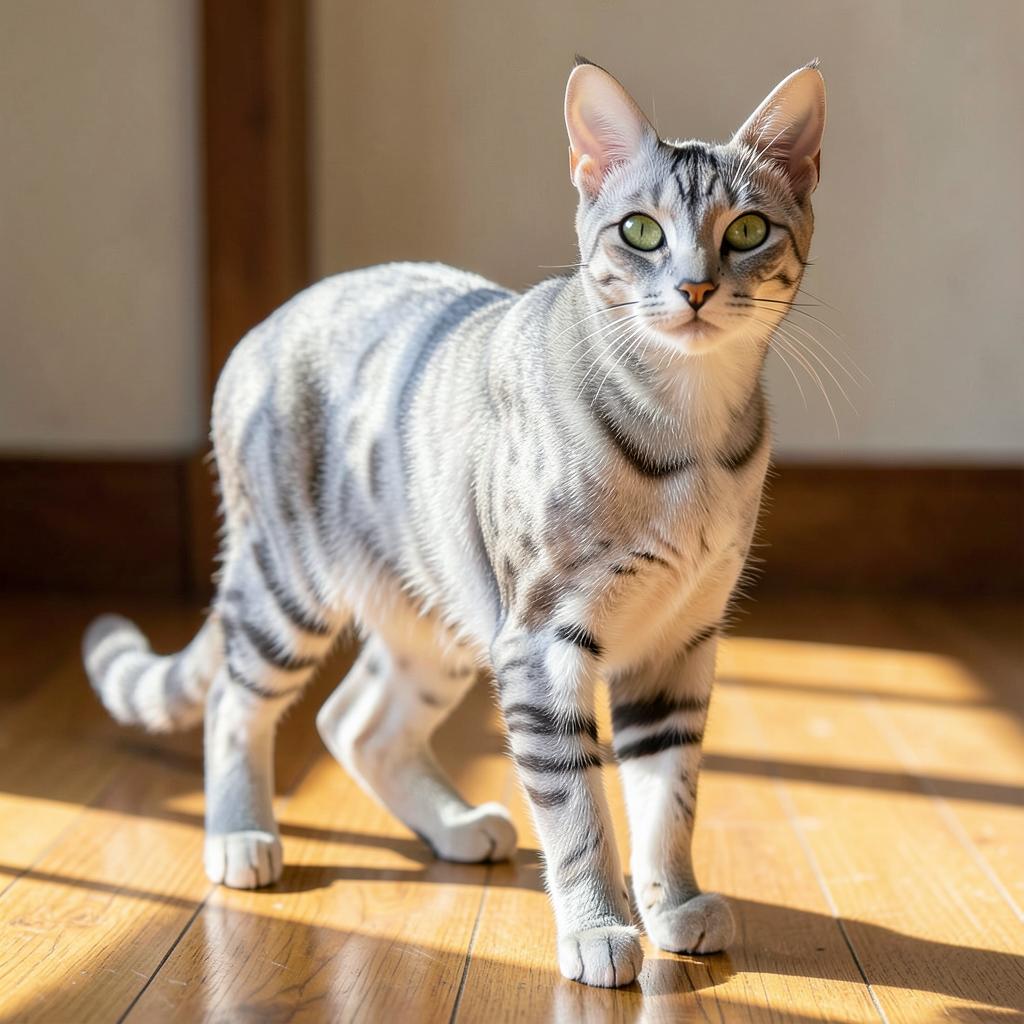
| Egyptian Mau | 3–5 kg | 9/10 | 3/10 | €80 |
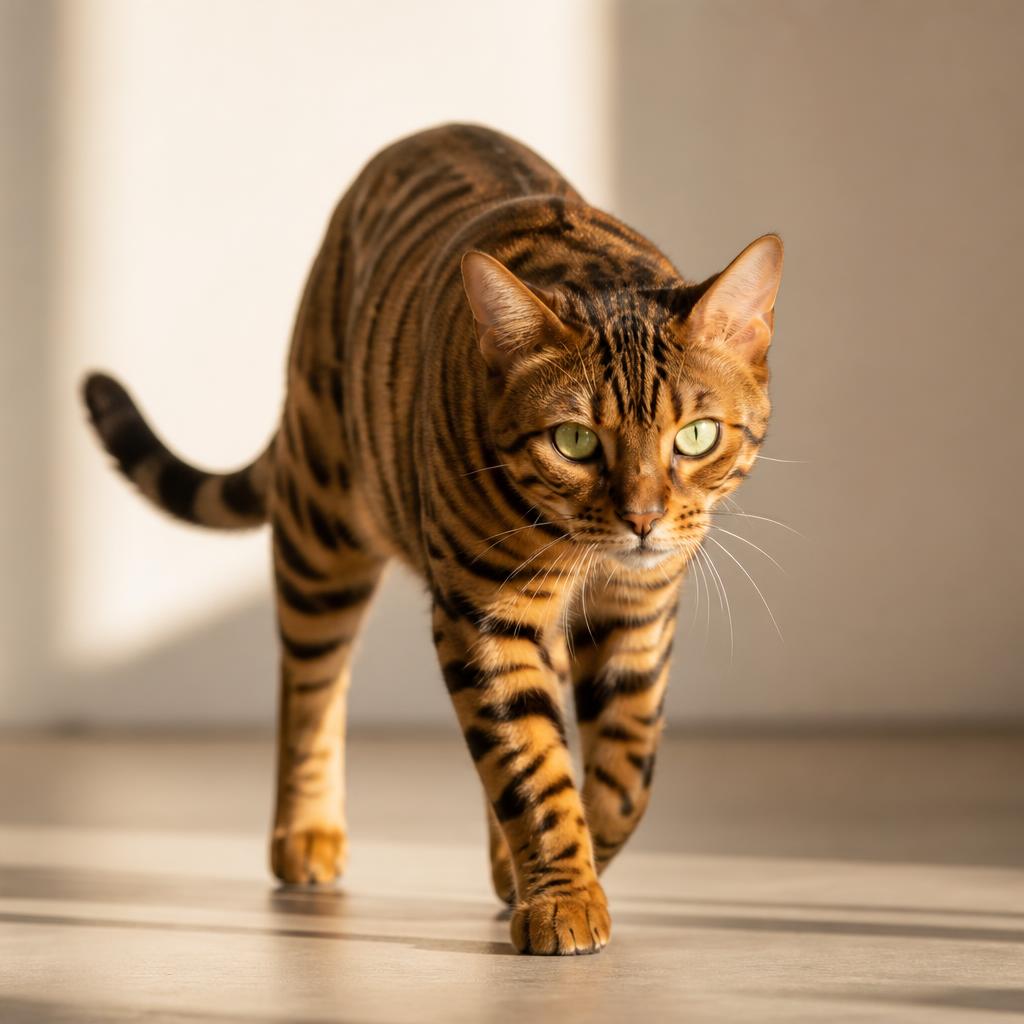
| Toyger | 3–6.5 kg | 9/10 | 3/10 | €88 |
Somali questions, answered
Is a Somali just a longhaired Abyssinian?
Essentially, yes. The Somali carries the longhair gene on an Abyssinian-type body and shares the ticked coat, large ears and busy personality.
How active are Somali cats?
Very. They stay playful and curious into adulthood and need active play, climbing space and mental stimulation every day.
Do Somalis need a lot of grooming?
More than a shorthair but less than a Persian. Twice-weekly combing is the minimum; daily during heavy sheds.
Are Somalis good with children?
Yes, with children who enjoy interactive play. They are not lap cats by default, but they are fun, engaging companions.
Can a Somali live indoors only?
Yes, and most should. Provide tall trees, puzzle feeders and safe high routes. A secure catio is a bonus.
Are Somalis hypoallergenic?
No. The semi-long coat will shed and spread allergen. Spend time with adults before committing.
What health tests should a breeder provide?
PK deficiency genetic testing and HCM screening. Ask for certificates and evidence of patellar checks.