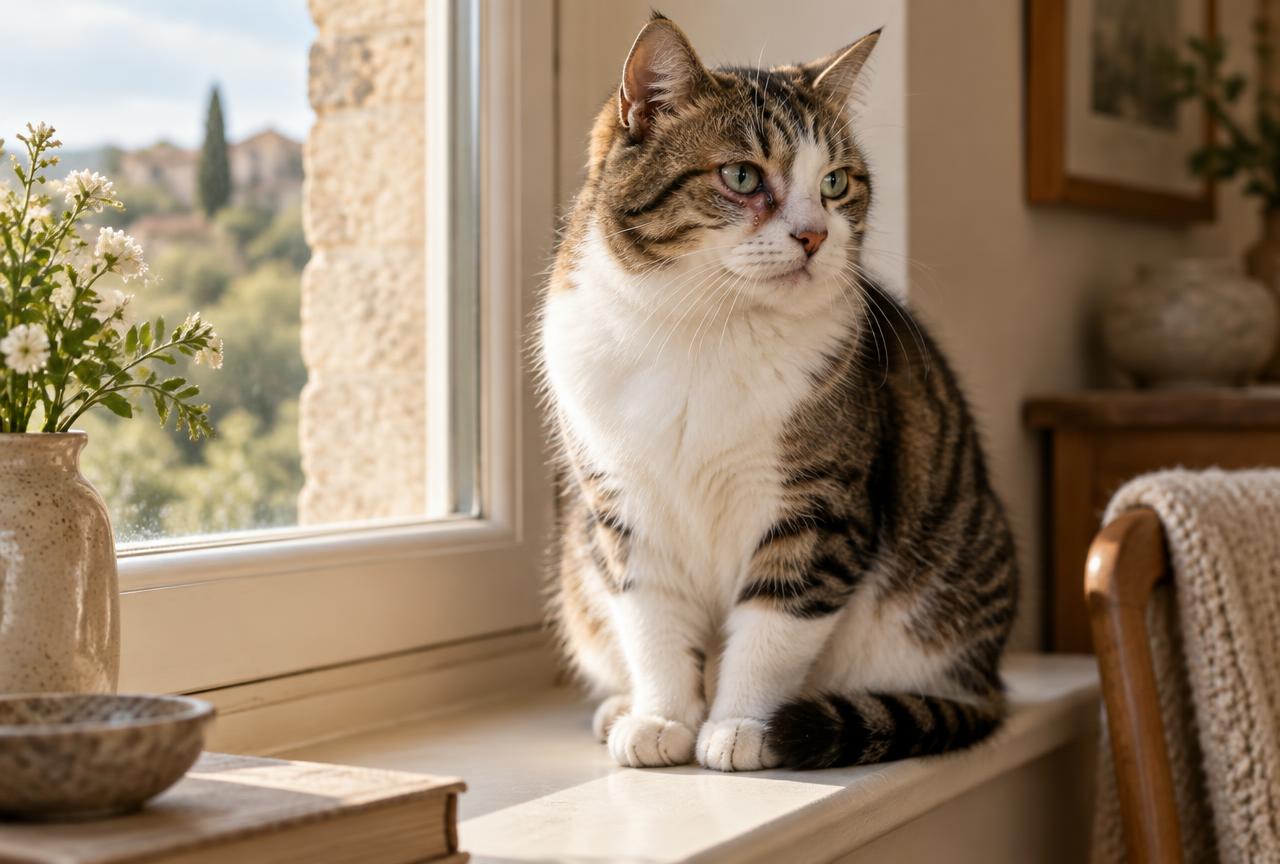
Cat years to human years: the honest conversion
Multiply by seven is a myth. A one-year-old cat is fifteen in human terms, a two-year-old is twenty-four, and after that each year adds about four.
Helen Marsh
Feline behaviourist and ReMews. staff writer
Published 21 September 2026
Dr Tomas Reyes, DVM
The short version
- The first cat year equals about fifteen human years, the second adds nine, and each year after adds about four
- Senior care begins around eleven, not seven: twice-yearly vet checks catch kidney and thyroid trouble early
- Life stage, not birthday, should drive food, play and vet decisions
Everyone knows the trick: take your cat's age, multiply by seven, and you get their age in human years. Everyone is also wrong. Cats do not age in a straight line. A one-year-old cat is already a young adult in every sense that matters, while a ten-year-old cat is middle-aged, not ancient. The first two years do an enormous amount of work, and after that the years level out to a gentler slope.
Getting this right matters for practical reasons, not just trivia-night reasons. Life stage decides how much a cat should eat, how often they should see a vet, what counts as normal behaviour and what counts as an early warning. Owners who think in calendar years tend to treat a one-year-old as a baby and a nine-year-old as elderly. Both mistakes cost the cat.
The honest conversion
The model most veterinary bodies now use looks like this. The first year of a cat's life equals roughly fifteen human years. The second year adds about nine more, taking a two-year-old cat to around twenty-four. Every year after that adds about four human years.
So a five-year-old cat is about thirty-six in human terms. A ten-year-old is around fifty-six. A fifteen-year-old is about seventy-six. Our own converter uses the same curve, refined month by month for kittens, because a three-month-old and an eleven-month-old are worlds apart and both get called one year old by people in a hurry.
| Cat age | Human equivalent | Life stage |
|---|---|---|
| --- | --- | --- |
| 3 months | about 4 | Kitten |
| 6 months | about 10 | Kitten |
| 1 year | 15 | Junior |
| 2 years | 24 | Young adult |
| 5 years | 36 | Prime adult |
| 8 years | 48 | Mature |
| 11 years | 60 | Senior begins |
| 15 years | 76 | Geriatric territory |
| 20 years | 96 | Remarkable old age |
Notice how the table punishes laziness at both ends. The early years rocket past, which is why kittenhood feels like it lasted a fortnight. The later years stretch out, which is why a healthy old cat can stay recognisably themselves for a very long time.
Why the first years count double
A kitten goes from blind and helpless to sexually mature in about six months. No human life stage compresses that much change into that little time. By twelve months most cats have their full adult size, their adult teeth, and a settled adult temperament, give or take a year of teenage energy.
That speed is why kitten mistakes are expensive. Nutrition, socialisation and vet care in the first year shape the next fifteen. It is also why a one-year-old cat behaving like a moody adolescent is perfectly on schedule: they are, in effect, fifteen.
There is a second reason the early curve is so steep: cats are built to breed young. In the wild, a cat that waited five years to mature would leave no descendants. Everything about the design favours growing up fast and staying capable for as long as possible afterwards.
The middle years are quieter than they look
Between roughly three and ten, a healthy cat changes slowly on the outside. This is the stage where trouble starts silently: weight creeps up a few grams a month, teeth accumulate tartar, activity dips a little each year without any single obvious moment you could point to.
The cat you see at seven is the sum of the habits you built at three.
The middle years are when weekly weighing at home, daily play and yearly vet checks pay the biggest dividends, precisely because nothing looks urgent. A kitchen scale and a carrier are all the equipment a cat weigh-in needs: weigh the cat in the carrier, subtract the carrier, jot it down. A drift of half a kilo in either direction at this stage is worth a conversation with your vet long before it is visible to the eye.
When senior actually starts
Most vets now treat eleven as the start of the senior years, not seven as older guidance suggested. Eleven to fourteen is senior; fifteen and beyond is geriatric. The distinction is not just vocabulary. Senior cats benefit from checks twice a year instead of once, because kidney disease, thyroid trouble and high blood pressure all become common after ten, and all three are manageable when caught early and expensive when caught late.
Watch for the quiet signals: drinking more, losing weight while eating well, hesitating before jumps, sleeping in new places, a coat that looks less kept, a voice that gets louder at night. Any of these is worth a vet visit, not a wait-and-see. None of them is just old age; each has a name and usually a treatment.
Breed and lifestyle shift the curve
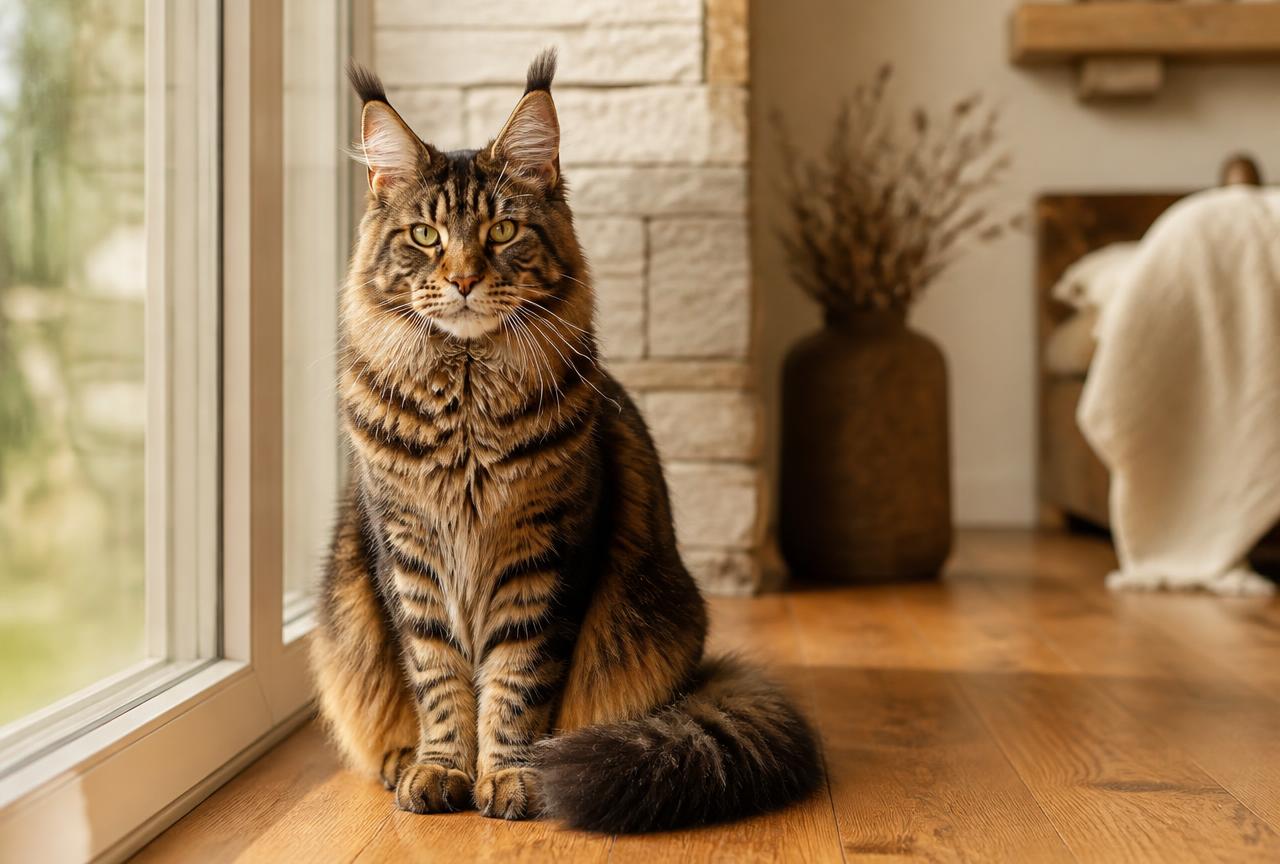
The conversion above is a good guide for the typical domestic cat, but individuals vary. Giant breeds like Maine Coons mature late, not reaching full size until three to five years old, so their early years run slightly behind the table. Indoor cats routinely reach their late teens, while cats with free outdoor access average closer to twelve, not because the outdoors ages them faster but because traffic, fights and infections shorten the run.
Body condition matters at least as much as either. A lean cat at ten is, in every way that can be measured, younger than an overweight cat at ten. Keeping weight honest is the closest thing to a youth potion that exists.
What each stage asks of you
- 1Kitten (0 to 12 months): kitten food, the full vaccination course, gentle handling every day, and as much safe play as they want.
- 2Junior (1 to 2 years): switch to adult food around twelve months, keep play intense, and keep an eye on weight as growth stops and appetite does not.
- 3Prime (3 to 6 years): hold weight steady, book yearly checks, and do not let play sessions fade away as the novelty wears off.
- 4Mature (7 to 10 years): weigh monthly, ask your vet about bloodwork baselines, and watch the water bowl.
- 5Senior (11 to 14 years): vet checks twice a year, easier access to beds and trays, and ramps or steps for favourite windowsills.
- 6Geriatric (15 plus): comfort first. Warmth, soft food if teeth are tired, nightlights if eyesight fades, and quick vet calls for any change.
A quick checklist worth pinning to the fridge:
- Weigh monthly, same scales, same time of day.
- Look at the water bowl level every day; drinking more is the single most useful early warning there is.
- Watch the jumps. Hesitation shows up years before limping does.
- Note the coat. A cat who stops grooming the hard-to-reach spots is telling you something aches.
Verdict by household
For a first-time owner, the main lesson is that kittens become adults faster than feels possible: do not put off training, neutering or the second vaccination because they still look small. For a multi-cat home, remember your cats may be in different life stages at once, and a senior sharing a bowl with a teenager often quietly loses out on food; feed them apart and weigh them separately. For anyone with an old cat, the maths is encouraging: a well-kept fifteen-year-old is not at the end, they are a healthy seventy-something with good years left.
When to call your vet
Age itself is never a diagnosis, but age changes what symptoms mean. Drinking noticeably more, weight loss, vomiting more than once a month, or any behaviour change in a cat over ten all deserve a proper look. Our senior-cat guide and the lifespan article go deeper on both ends of the curve.
Questions people actually ask
Is the seven-year rule ever right?
Only by accident, around age four. A one-year-old cat is far older than seven in human terms, and a fifteen-year-old cat is younger than the hundred-plus the rule suggests.
Do indoor cats age more slowly?
They usually live longer, roughly two to three times longer on average, because they avoid traffic, fights and infections. The ageing curve itself is the same, indoor cats just get further along it.
Do some breeds age faster?
Giant breeds like Maine Coons mature later, taking three to five years to reach full size, and some lines have shorter lifespans. The conversion above is a good guide for the typical domestic cat.
How old was the oldest cat ever?
The verified record is thirty-eight years and three days, held by a cat called Creme Puff from Texas. Most well-cared indoor cats reach fifteen to twenty.
When should I switch to senior food?
Around eleven, unless your vet suggests earlier. Watch phosphorus levels and ask for bloodwork first, because the right senior diet depends on kidney health.
Sources
- Life stage and preventive care guidelines, American Animal Hospital Association
- Ageing and senior cat care, International Cat Care
- Feline life stages, Cornell Feline Health Center
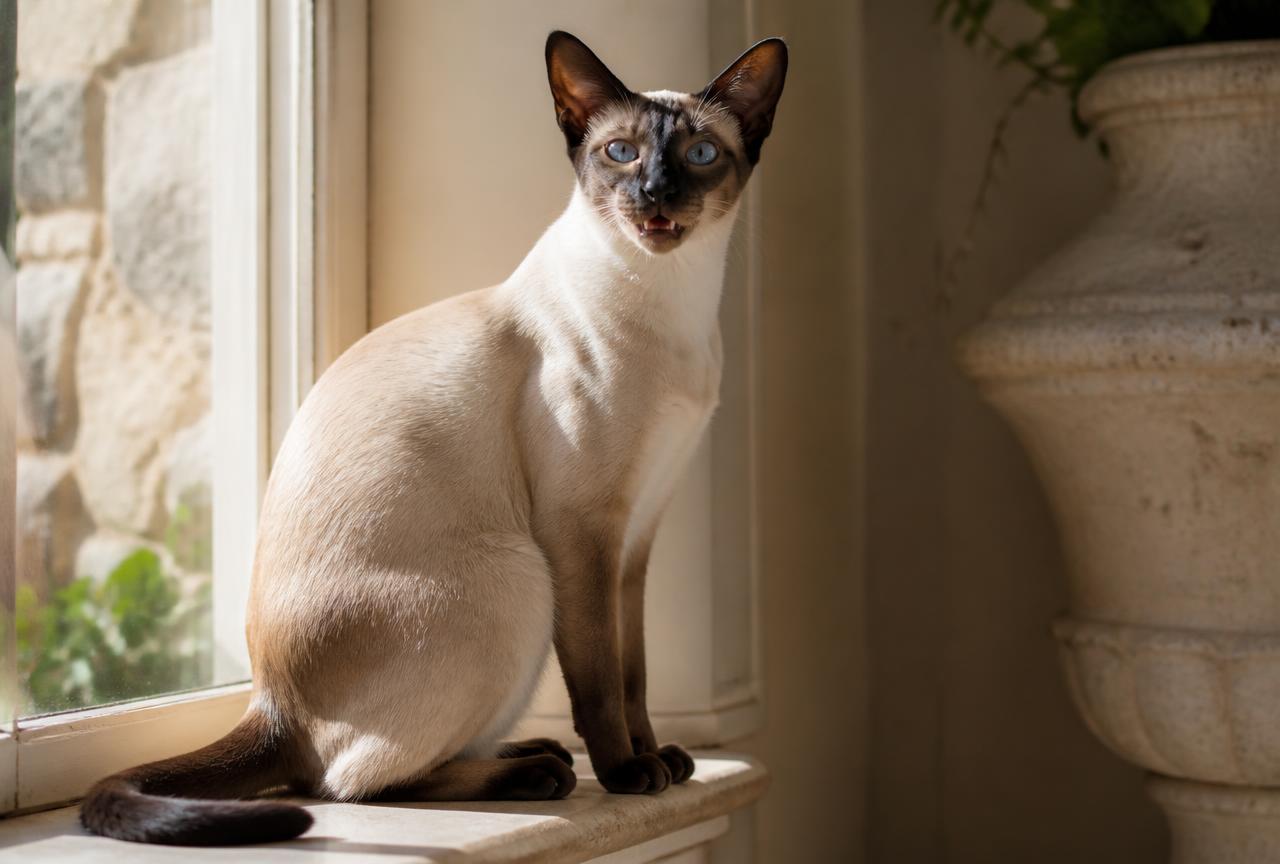
Breeds mentioned
Put it into practice
Read next
Cat vaccinations: what they need, when, and what is optional
Which vaccines every cat needs, which depend on lifestyle, the kitten schedule, booster timing, and the honest case for indoor cats.