
Whiskers: what they do, and what they are telling you
What cat whiskers are actually for, and the mood signals in their direction.
Helen Marsh
Feline behaviourist and ReMews. staff writer
Published 21 September 2026
Dr Tomas Reyes, DVM
The short version
- Whiskers are deeply rooted sensory organs, not ordinary fur, and they register touch without contact
- Cats have 24 muzzle whiskers in four rows, plus whiskers above the eyes, on the cheeks and on the front wrists
- Never trim or pluck whiskers: cut whiskers leave a cat misjudging gaps and jumps for weeks
- A wide shallow bowl prevents whisker fatigue, a common cause of fussy eating
- Whiskers pinned flat with a tense face can signal pain, especially dental pain
A cat's whiskers look like decoration and work like radar. They are the reason a cat can walk a narrow shelf in the dark, judge whether its shoulders will fit through a gap, and catch the exact position of your hand in the half second before it lands on their head. Most owners glance past them. They are one of the most information-dense parts of the cat, and they change with mood in ways you can learn to read in a week.
This piece covers what whiskers physically are, the jobs they do, and the signals their direction carries, including the small domestic detail almost nobody considers: the width of the food bowl.
What a whisker actually is
A whisker is not a hair with attitude. It is a vibrissa: a specialised tactile hair that grows from a follicle three times deeper than ordinary fur, seated in a capsule packed with nerve endings and blood vessels. The follicle is wrapped in a blood sinus system that registers the slightest deflection. A whisker does not need to touch anything to do its job. Moving air pushed ahead of a passing insect bends it, and the cat registers the object before contact.
Each whisker also has a small striated muscle at its base, which is why a cat can swing its whiskers forward or pin them flat at will. The movement is deliberate, controlled, and fast.
A cat's whiskers are measuring instruments bolted to its face. Everything they touch, the cat has measured.
The whisker map
Cats have 24 whiskers on the muzzle, arranged in four horizontal rows of six on each side, plus a few above each eye, on each cheek and on the back of the wrists of the front legs. The wrist whiskers are the least known and arguably the most useful: they let a cat monitoring a caught mouse or ball know its exact position without looking at it, which is how cats reposition prey without watching their paws.
The span of the facial whiskers is roughly the width of the cat's body at the shoulders. That is not a coincidence. It is how a cat decides whether a gap is worth attempting in the dark, and it is the reason a long-whiskered cat misjudges doorways badly if the whiskers are ever cut.
Forward, back, still: reading the direction
Whisker position is one of the cleanest mood signals on the cat, and it works alongside the ears and tail. The directions worth learning:
| Position | What it usually means | What you will notice alongside it |
|---|---|---|
| --- | --- | --- |
| Relaxed, evenly spread | Calm, content, at ease | Soft eyes, slow blinks, ears forward or neutral |
| Swept forward, fanned wide | Interest, focus, hunting mode | Dilated pupils, forward ears, low stalking posture |
| Pinned flat against the cheeks | Fear, pain, or a strong wish to withdraw | Flattened ears, crouched body, dilated pupils |
| Drooping or raked to the sides | Fatigue, illness, or bowl-related discomfort | Dull coat, reluctance to eat, withdrawn behaviour |
The forward position during play is easy to spot and easy to misread as aggression. Whiskers fanned forward over a feather toy mean the cat is enjoying itself. The same direction over a stranger's hand, with the ears back, does not.
The bowl problem nobody expects
Whisker fatigue is the informal name for a real phenomenon: whiskers are richly innervated, and a cat eating from a narrow, deep bowl has its whiskers pressed against the sides at every bite. Some cats tolerate it. Others develop workarounds that owners misread as fussiness: pulling kibble out of the bowl to eat it off the floor, eating only from the centre and leaving the ring of food at the edge, or approaching the bowl with obvious reluctance.
The fix costs almost nothing: serve food and water in a wide, shallow dish or saucer, so the whiskers never contact the sides. Watch a reluctant eater for two days after the switch. The change is often immediate.
The dark advantage
A cat's vision in dim light is good, but the whiskers are what make close-range darkness work. In the final approach to prey, or the last stretch before a jump, the whiskers sweep forward and take over where the eyes lose focus at very close range. Cats are actually long-sighted in low light: they struggle to focus on objects within about 30 cm, and the whiskers fill exactly that gap.
This is why a cat investigating a new box in a dark room looks so deliberate. It is reading the box with its face.
Grooming, shedding and the one rule
Whiskers shed naturally, one or two at a time, like the rest of the coat. Finding a whisker on the sofa is normal. The one rule is absolute: never trim them, and never pluck a loose one. Let them fall on their own.
A cat with cut whiskers misjudges gaps, bumps its face, jumps hesitantly, and can lose confidence for weeks until regrowth catches up. Plucking is worse: it damages the deep follicle and is genuinely painful. During grooming sessions, simply leave the face alone.
- Leave the whiskers out of every brushing routine
- Wipe a dirty face with a damp pad around the whiskers, never against them
- Expect a shed whisker or two per month: more is normal in moulting season
- If whiskers look brittle, kinked or broken along their length, mention it at the next check-up
When pinned whiskers mean more than mood
Whiskers pinned flat with the ears back at rest, repeated across days, is a pain signal rather than a mood. Facial pain, particularly dental disease, often shows up first as a tight-faced cat whose whiskers are constantly drawn back. Cats are specialists at hiding pain, and the face is one of the few places it leaks.
Combine the whisker check with the rest of the face: squinting, a tense muzzle, chewing on one side, or dropping food. Two or more of those together deserve a vet appointment.
When to call your vet
- Whiskers persistently pinned back with a tense face, with no obvious fear trigger
- Broken or brittle whiskers along their length, which can accompany skin disease or nutritional problems
- Swelling, crusting or hair loss at the whisker pads
- Any combination of whisker changes with reduced appetite, squinting or one-sided chewing
Verdict by household
- Kitten households: expect forward-swept whiskers constantly; kittens live in play mode and their wrist whiskers are learning the repositioning job
- Indoor cats: the bowl change matters most, since every meal hits the same whiskers
- Multi-cat homes: watch whisker direction at the shared resources; a cat eating with pinned whiskers while another waits nearby is telling you the feeding station needs splitting up
- Long-haired breeds: keep brushing away from the muzzle, and check that mats are not tugging at the cheek whiskers
Learn the three positions this week: relaxed, forward, pinned. Everything else a cat does with its face makes more sense once those are in place.
Questions people actually ask
What are cat whiskers for?
Whiskers are touch sensors. They detect nearby objects and moving air without contact, help the cat judge whether gaps fit its body, and track close-range prey in the dark. They also signal mood through their direction: relaxed, forward for focus, pinned flat for fear or pain.
Is whisker fatigue real?
It is an informal name, not a formal diagnosis, but the underlying mechanism is sound: whiskers are densely innervated, and constant contact with bowl sides is unpleasant for some cats. Cats affected pull food out of deep bowls or eat reluctantly. A wide, shallow dish removes the contact and usually resolves it.
Do cat whiskers grow back if cut?
Yes, they regrow like other hair, typically within a few months. But a trimmed whisker still leaves the cat without its measuring tools until regrowth completes, causing misjudged jumps and gaps. Never trim them deliberately, and never pluck them, which is painful and can damage the follicle.
Why do cats have whiskers on their legs?
Cats have a small cluster of whiskers on the underside of the front wrists. They detect the position of held prey, letting the cat adjust its grip without looking. They also help judge the reach of a jump when the front paws are placed on an edge.
Why is my cat losing whiskers?
One or two shed whiskers a month is normal and they regrow. More frequent loss, brittle or broken whiskers, or hair loss around the whisker pads can point to skin disease, nutritional problems or, in multi-cat homes, chewing from another cat. Mention persistent changes to your vet.
Can I touch my cat's whiskers?
Light accidental contact is harmless, but avoid holding, bending or trimming them. The follicles are deep and richly innervated, so pulling is genuinely uncomfortable. When wiping the face, go around the whiskers rather than against them.
Sources
- The vibrissal system of the domestic cat, Journal of Comparative Neurology
- Whisker facts, International Cat Care
- Cat senses and communication, RSPCA
- Whisker fatigue: what it is and what to do, Cornell University College of Veterinary Medicine
Breeds mentioned
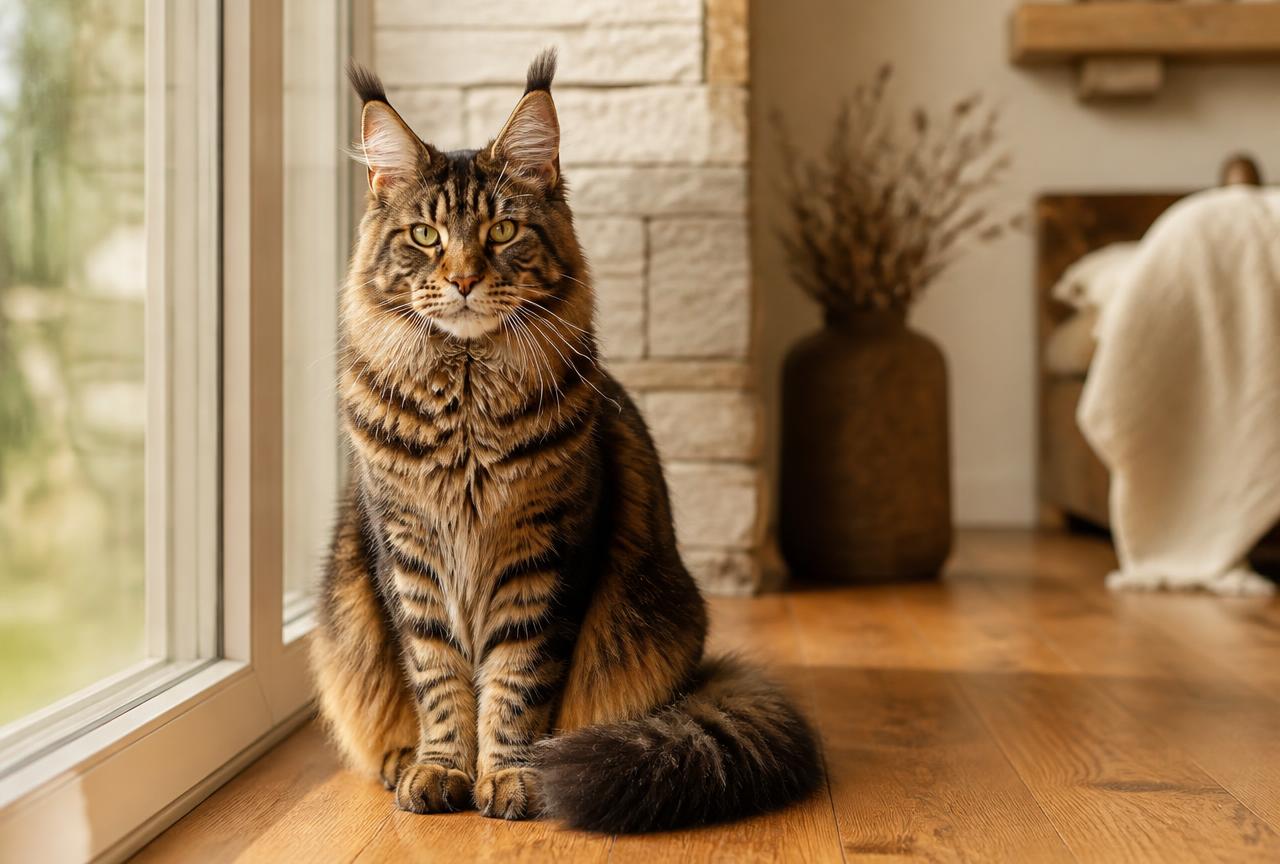

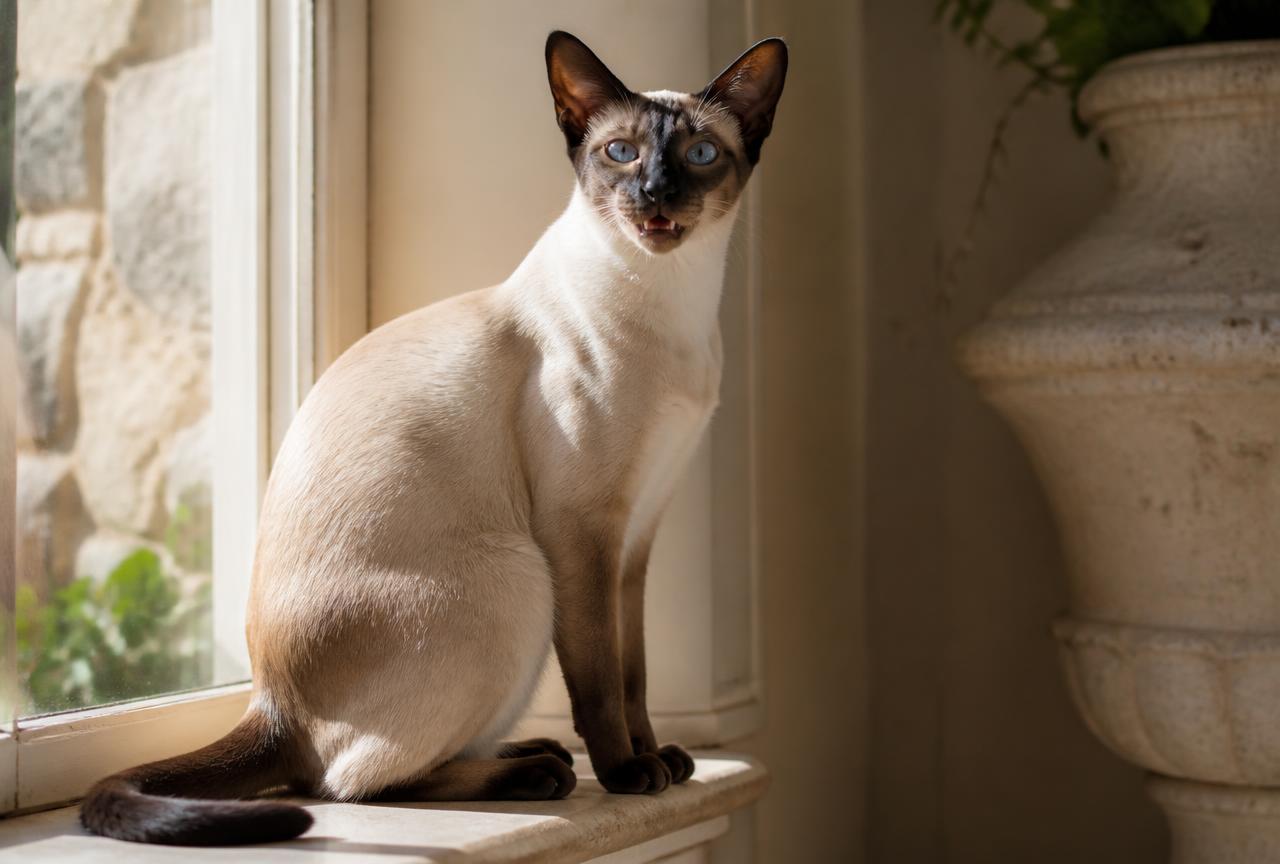
Put it into practice
Read next
Cat tail meaning: reading the loudest part of a cat
A cat tail meaning guide: what upright, puffed, tucked, lashing and quivering tails actually say, and how to answer each one.