
Hissing and growling: what a cat is warning you about
A hiss is not aggression. It is a sentence, and once you can read it, most confrontations never happen.
Helen Marsh
Feline behaviour consultant, ISFM-certified
Published 20 September 2026
Dr Amara Okonjo, DVM
The short version
- A hiss is a request for distance, step four on a six-step warning ladder that starts with a stiffening body and a lashing tail.
- Flat ears and a crouch mean fear; a puffed sideways stance means a boundary being defended. The response differs.
- Never punish a hiss: a cat that learns warnings do not work skips them and goes straight to biting.
- Hissing when one specific spot is touched is a pain signal, and in a settled adult cat any new hissing earns a vet visit.
- Fear hisses are resolved with exits and distance, not comfort or correction.
A hiss is not aggression. It is a sentence, and once you can read it, most confrontations never happen.
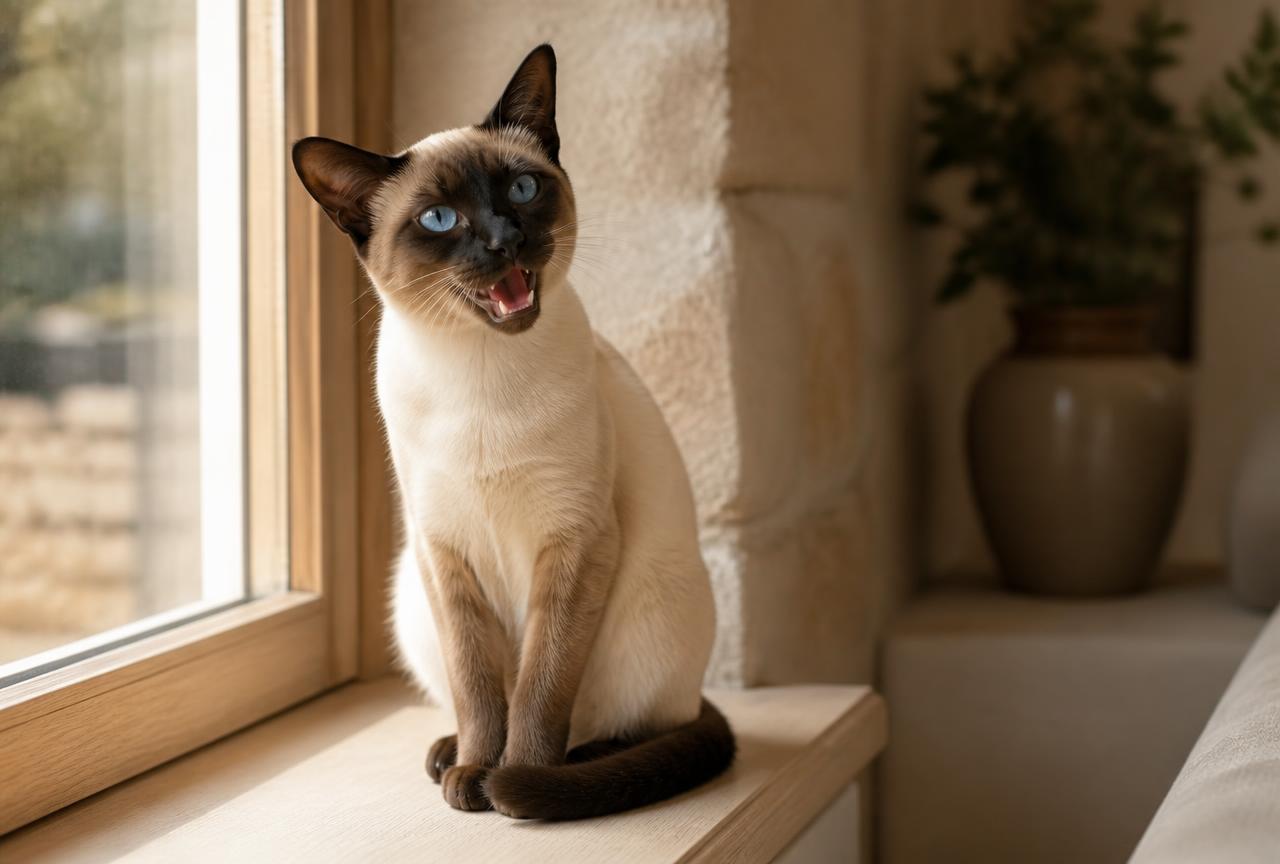
Few sounds change the temperature of a room like a cat's hiss. It feels personal, even hostile. It is neither. Hissing sits in the middle of a ladder of warnings a cat climbs reluctantly, and it almost always means the same thing: I am uncomfortable, and I need more distance.
Cats hiss because it works. It costs no energy, risks no injury, and it reliably makes the thing back off. Your job is not to stop the hiss. It is to hear what sits underneath it, because a cat whose warnings are ignored learns to skip them and go straight to teeth.
The grammar of a hiss
Hissing is distance-increasing behaviour: a request for space, not a declaration of war. It sits on a ladder that runs from the subtle to the unmistakable:
- 1Body freezes or stiffens; tail starts to lash.
- 2Ears turn sideways, then flatten.
- 3A low growl, felt as much as heard.
- 4The hiss itself, mouth open, breath forced hard over the tongue.
- 5A swat, usually with claws sheathed first.
- 6Contact: claws and teeth.
The useful insight is that the hiss is step four of six. By the time you hear it, the cat has already asked politely three times in ways most humans miss. Learn steps one to three and you will rarely hear step four.
What the body adds to the sound
The same hiss means different things depending on the body it comes from. The decoder below reads the combination, but the principles are simple.
| Body | What it signals | Your move |
|---|---|---|
| --- | --- | --- |
| Ears flat, body crouched low | Fear: make me invisible | Give an exit route, remove the trigger |
| Puffed up, sideways stance | Boundary: I will defend this | Separate calmly, add distance |
| Stiff, staring, tail rigid | Escalation loading | Freeze your approach, look away |
| Fairly relaxed body | Final warning before contact | Simply stop what you are doing |
The flat-eared crouch is the one most people misread as anger. It is fear. A frightened cat wants the threat to leave, not a fight, and treating fear with punishment makes the fear, and the hissing, worse.
A cat that hisses is a cat that is still talking to you. Worry about the one that has stopped warning.
The five situations behind most hissing
A stranger or a new home. Fear-based hissing at visitors is normal caution. Let the cat observe from height and distance, never force an introduction, and let it approach on its own schedule, which may take days.
Another cat. Most common in the first weeks of a shared home, or around food bowls, trays and doorways. This is resource and territory negotiation. The fix is structural: more resources, spread out, and slower introductions, as we cover in how to introduce two cats.
Handling. Hissing when picked up, groomed or petted means the hold, the timing or the duration is wrong. Support the hindquarters, keep sessions short, and end them before the tail starts lashing. Breeds differ in tolerance: a Ragdoll will put up with handling that a more reserved cat declines, but every cat has a limit.
The vet or the carrier. Terror, plain and simple. The carrier smells of the last visit, and the surgery is a sensory nightmare of other animals and restraint. Leave the carrier out as furniture, feed near it, and ask your vet about low-stress handling appointments.
One specific spot touched. Take this seriously. A cat that hisses when you touch its hip, mouth or belly, consistently, is telling you it hurts. See the section below.
When hissing means pain
Cats conceal pain as a survival instinct, which makes the few signals they do give precious. A hiss or swat when one specific area is touched, especially from a cat that has always tolerated handling, is one of the clearest pain windows a cat offers. Arthritis in an older cat, dental disease, an abscess under the fur: all of them announce themselves this way before any other sign.
The pattern to watch: located, consistent, and new. Any two of those three earns a vet appointment.
Verdict by household
New cat in the home: expect hissing for days to weeks. Provide vertical space and separate resources, and judge progress by the trend, not the day.
A child in the house: teach one rule, when the cat hisses, the game is over, and everyone walks away. Children who respect the hiss rarely meet the claws.
Long-term cat that has started hissing: a personality change in a settled adult is a medical question first and a behaviour question second. Book the vet.
Multi-cat standoff that is not improving: after a month of proper resources and slow reintroduction, ask your vet about a referral to a behaviourist. Early help is cheaper than entrenched war.
When to call your vet
Call if the hissing is new in a cat with an established temperament; if it is triggered by touch in a consistent location; if it comes with hiding, appetite loss or litter tray changes; or if a senior cat has started growling or yowling at night, which can accompany high blood pressure, hyperthyroidism or cognitive decline. Behaviour that changes without a household reason deserves a clinical look before a training plan.
Questions people actually ask
Why does my cat hiss at me for no reason?
There is always a reason, but it may be one you cannot see: pain when touched in a certain spot, fear of a smell or sound, or a subtle warning like a lashing tail that was missed. New, unexplained hissing in a settled cat deserves a vet check.
Should I punish my cat for hissing?
No. Hissing is communication, the middle of a warning ladder. Punishing it teaches the cat that warnings do not work, which produces a cat that bites without warning. Give distance instead, and address whatever triggered it.
Why does my cat hiss at my other cat?
Usually resource or territory negotiation, most intense in the first weeks of living together. Add trays, bowls and resting spots so nothing needs guarding, separate them calmly when it flares, and reintroduce gradually. Seek help if it has not improved in a month.
Is it normal for a cat to hiss at visitors?
Yes, it is ordinary caution toward an unfamiliar, large, loud animal. Let the cat watch from a high perch or another room, ask visitors to ignore it, and let the cat make the first approach in its own time.
What is the difference between a hiss and a growl?
A hiss asks for distance; a growl holds ground. Growling signals the cat has moved past requesting and is prepared to defend. Both deserve respect, but a growl, especially during handling, calls for immediate retreat.
Why does my cat growl at night?
In a senior cat, night-time growling or yowling can accompany high blood pressure, hyperthyroidism or cognitive decline rather than a behavioural issue. It is worth mentioning to your vet, particularly alongside appetite or weight changes.
Sources
- Aggression in cats, International Cat Care
- Cat communication and body language, Cats Protection
- Feline behaviour problems: aggression, Cornell Feline Health Center
- Reading cat body language, RSPCA
Breeds mentioned

Put it into practice
Read next
Catnip: why some cats lose their minds, and others shrug
Catnip explained: the genetics behind the response, why a third of cats are immune, how much to give, and the practical jobs it does well.