Are cats nocturnal? Not quite, and it matters at 3 a.m.
Cats are crepuscular, wired for dawn and dusk, not the deep night. Here is why the 3 a.m. sprint happens and how to move it to a better hour.
Helen Marsh
Feline behaviourist and ReMews. staff writer
Published 21 September 2026
Dr Tomas Reyes, DVM
The short version
- Cats are crepuscular, most active at dawn and dusk, not truly nocturnal
- Midnight zoomies usually mean a boring day, an early dinner, or a habit that has been accidentally rewarded
- Hunting play followed by supper before your bedtime, plus total night-time ignoring, resets most cats in two to three weeks
Ask anyone who has been woken at 3 a.m. by the sound of a small animal sprinting down the hallway and they will tell you cats are nocturnal. The science disagrees, politely. Cats are crepuscular, which means their natural activity peaks land at dawn and dusk, the two times of day when their wild ancestors' prey was easiest to catch.
The distinction sounds like trivia until you realise it is the key to fixing the midnight sprints. A crepuscular animal can be nudged. A truly nocturnal one, like an owl, cannot. Your cat's clock is negotiable; you just have to negotiate on its terms.
What crepuscular actually means
The cat's wild relatives hunt when light is low but not gone: mice and birds are busy, and bigger predators struggle to see. Everything about the cat's body is tuned for those hours, from eyes that gather six times more light than ours to hearing that picks up the high-pitched rustle of prey in dim grass.
Domestic life bends that rhythm rather than erasing it. Studies of house cats show activity peaks in the early morning and evening, with a long quiet stretch overnight and another through midday. Your cat is not broken at 3 a.m.; they are running an ancient schedule in a house that keeps office hours.
Why yours goes wild at midnight
Several things stack the energy into the small hours:
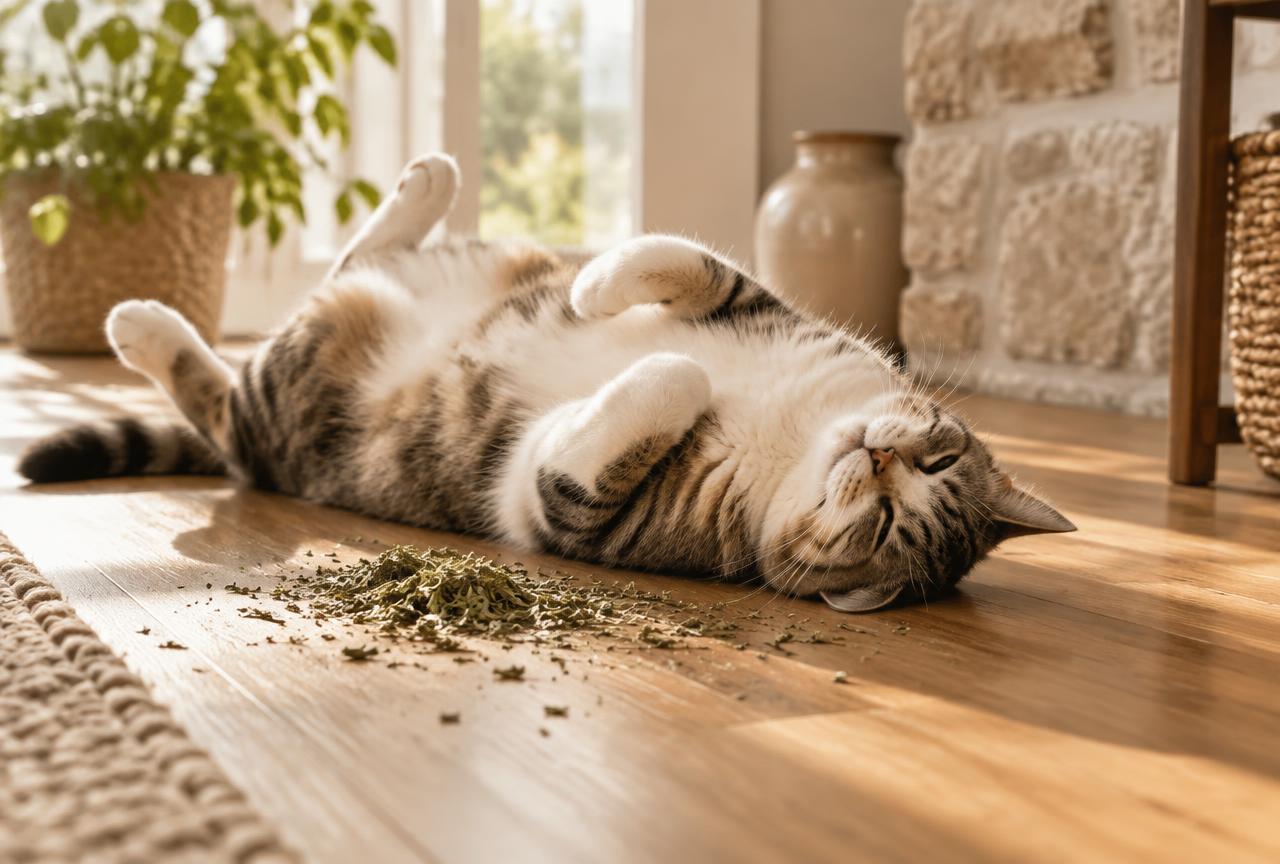
- Boredom: a cat alone all day has slept all day. Midnight is simply when their day reaches its evening peak.
- Hunger: in the wild, dusk activity ends with a successful hunt and a meal. A cat fed at 6 p.m. is peckish by 2 a.m.
- Reinforcement: if a midnight pounce has ever earned food, play or even a grumble, the behaviour has been paid for and will repeat.
- Youth: kittens and teenagers run hotter everywhere, including at night.
The midday dead zone
The other half of the crepuscular pattern is the enormous nap. Cats sleep twelve to sixteen hours a day, concentrated in the middle of the day and the middle of the night. That is why a cat flat out on the sofa at 1 p.m. is not lazy; they are between shifts.
Older cats blur the pattern, sleeping deeper and longer at both ends. Kittens blur it the other way, napping in short bursts between chaos. Both are normal for their stage, and neither needs fixing.
Shifting the schedule
You cannot delete the dawn and dusk peaks, but you can move them onto your hours. The method is boring, which is why it works:
- 1Anchor the evening: ten minutes of hunting play with a wand toy, an hour before your bedtime, ending with a catch.
- 2Feed the last meal right after that play. Hunt, eat, groom, sleep is the natural sequence, and a full cat is a settled cat.
- 3Make nights unrewarding: no food, no play, no reaction to 3 a.m. theatre. Earplugs for two weeks beat a year of negotiations.
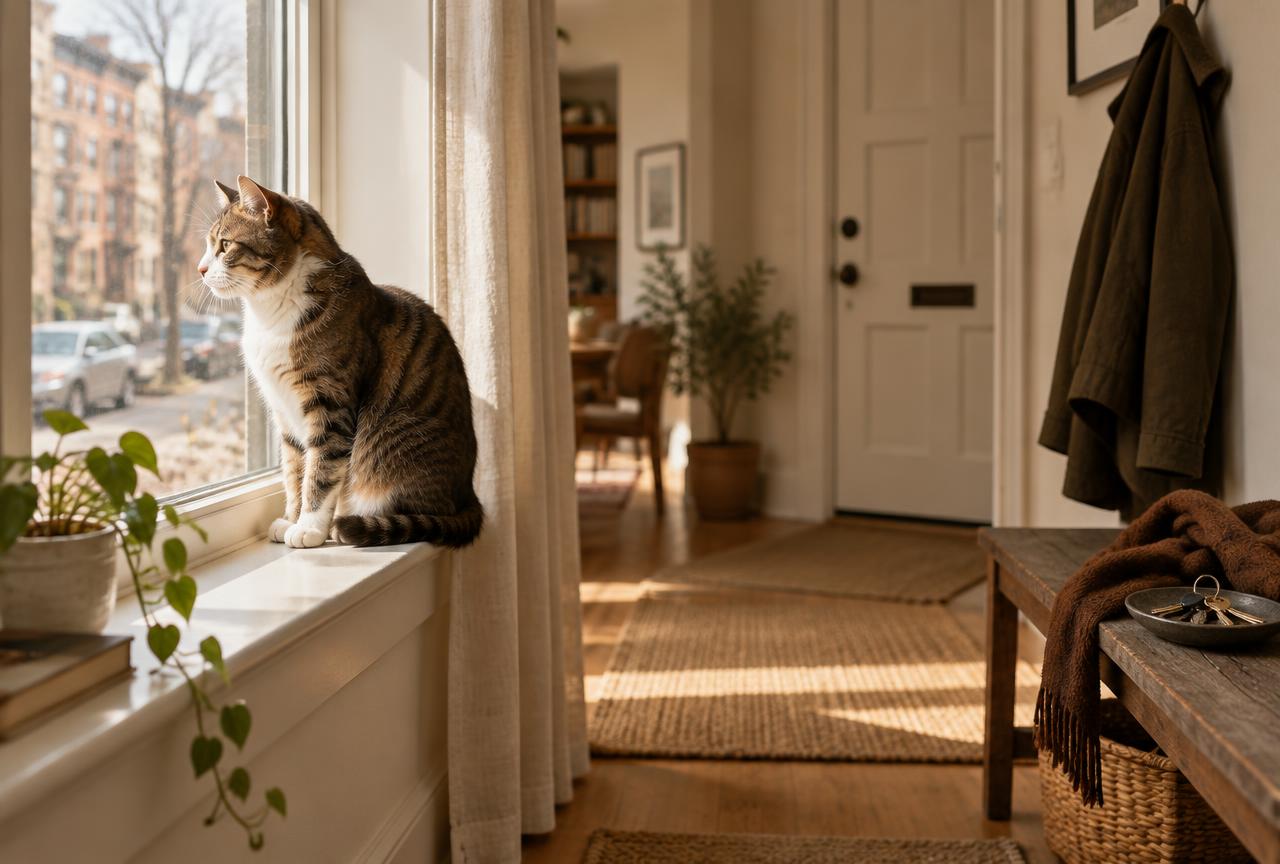
- 4Fill the day: a window seat, a puzzle feeder or a timed toy breaks up the daytime sleep so the evening peak arrives on schedule.
- 5Hold the line for two to three weeks. Cats adjust slowly, then all at once.
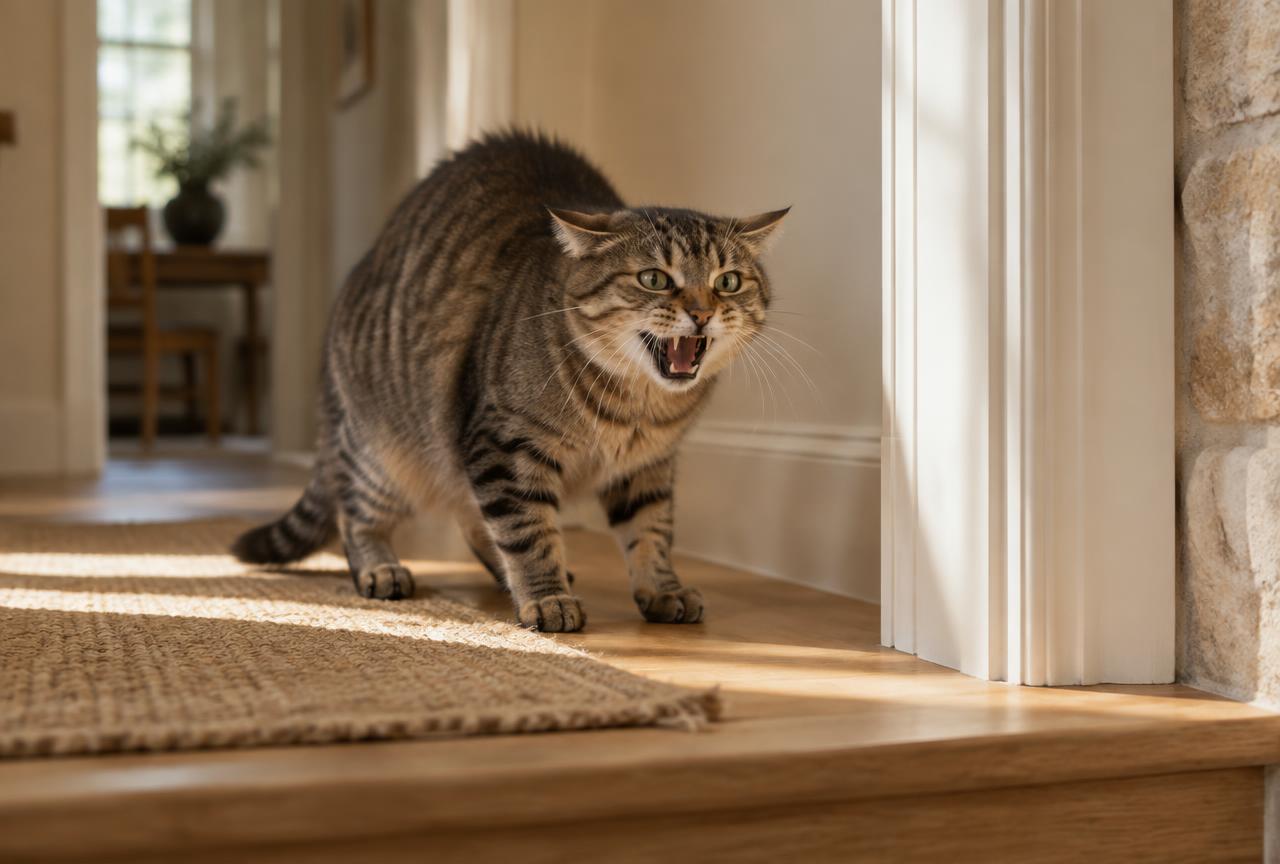
The step everyone skips is the third one, because ignoring a cat at 3 a.m. is genuinely hard. It is also the step that does the most work. Every exception resets the count.
The dawn patrol problem
First light is the harder peak to move, because it arrives with the sun rather than with you. Blackout curtains help more than any gadget. An automatic feeder set for 5 a.m. breaks the link between your alarm and breakfast, which is usually what a dawn serenade is actually about. And a cat who has hunted and eaten at 9 p.m. is measurably less interested in a 5 a.m. encore.
Verdict by household
For a shift worker, the good news is that cats adapt to the household they live in, so an odd schedule is fine as long as it is consistent; a cat does not care that your evening happens at noon. For a light sleeper, the play-then-supper routine plus genuine night-time ignoring solves most cases within a month. For a multi-cat home, overnight chasing games need daytime outlets for both cats, or the two of them will happily keep each other on the wrong clock forever.
When to call your vet
A sudden change in night-time behaviour is different from a lifelong habit. An older cat who starts pacing, yowling or seeming lost at night may be dealing with thyroid trouble, high blood pressure or cognitive decline, all of which are treatable or manageable. Our senior signals guide covers the pattern in more detail, and the why-cats-sleep piece maps the full daily rhythm.
Questions people actually ask
Are any cats truly nocturnal?
Not domestic cats. Even feral cats centre their hunting on dawn and dusk. Deep-night activity in a house cat is usually learned behaviour, not instinct.
Why does my cat wake me at exactly the same time every night?
Because something, once, worked. A single rewarded 4 a.m. wake-up can anchor the habit for years. Consistent non-reaction is the only way to break it.
Do cats sleep more in winter?
Many do, a little. Shorter days can deepen the midday rest period, and cold weather encourages longer naps in warm spots. The dawn and dusk peaks remain.
Should I get a second cat so they play at night instead of waking me?
Only if you want a second cat anyway. Two cats often entertain each other at exactly the hours you were hoping to sleep.
Is it cruel to shut a cat out of the bedroom?
No, as long as their needs are met elsewhere: food timed right, water, a tray, warm sleeping spots and real play during your waking hours.
Sources
- Feline behaviour and activity rhythms, International Cat Care
- Night-time activity in cats, Cornell Feline Health Center
- Sleep and circadian rhythm in domestic cats, Journal of Feline Medicine and Surgery
Put it into practice
Read next
Leaving your cat alone: boredom, loneliness and the signs
Cats have a reputation for indifference that their behaviour does not support. Most cope well with a working day alone; some genuinely struggle. How to tell which cat you have, and how to set up the hours you are away.